

First, Understand: Logo Design Is Not Just Giving a Name
When a new company approaches a designer for a logo, the most common communication gap is sending just one sentence: "Our company is called XYZ, please design a logo for us." With only that, the designer has no idea what your business does or where the logo will appear. They can only produce a few versions based on guesswork, which often leads to more back-and-forth revisions. The goal of preparing materials is to help the designer understand your company, your usage scenarios, and your boundary conditions before starting work.
You don't need to have everything ready at once, but the earlier the following types of information are clarified, the less likely the design direction will go off track.
Essential Basic Information
1. Company Name and Text Format
Provide the full company name, brand abbreviation, English name (if any), and specify whether you want the full name, abbreviation, or just a graphic in the logo. Confirm the exact spelling of Chinese, English, and pinyin, including capitalization, spaces, and hyphens. If the name contains rare characters or polyphonic characters, it's best to provide pronunciation notes to avoid the designer misjudging font choices.
2. Business Description and Target Audience
Use a few sentences to explain what your company does, who it sells to, and how it differs from similar companies. You don't need to write a business plan, but avoid overly broad descriptions like "doing internet" or "doing trade." The business description directly influences the visual direction: for example, the same word "cloud" would suggest different visual languages for cloud computing versus agricultural e-commerce.
3. Main Usage Scenarios of the Logo
This is something new companies often overlook, but it greatly affects the design. Please specify where the logo will primarily appear, such as:
- Business cards, letterheads, email signatures
- Website, mini-programs, app icons
- Store signs, exhibition booths
- Product packaging, labels
- Social media avatars, e-commerce store headers
Different scenarios have different requirements. App icons need to be recognizable at very small sizes, while signs and packaging may involve single-color printing, hot stamping, silk screening, etc. By specifying the scenarios in advance, the designer can determine the graphic complexity, whether horizontal and vertical versions are needed, and whether a single-color version is required.
4. Style Preferences and References
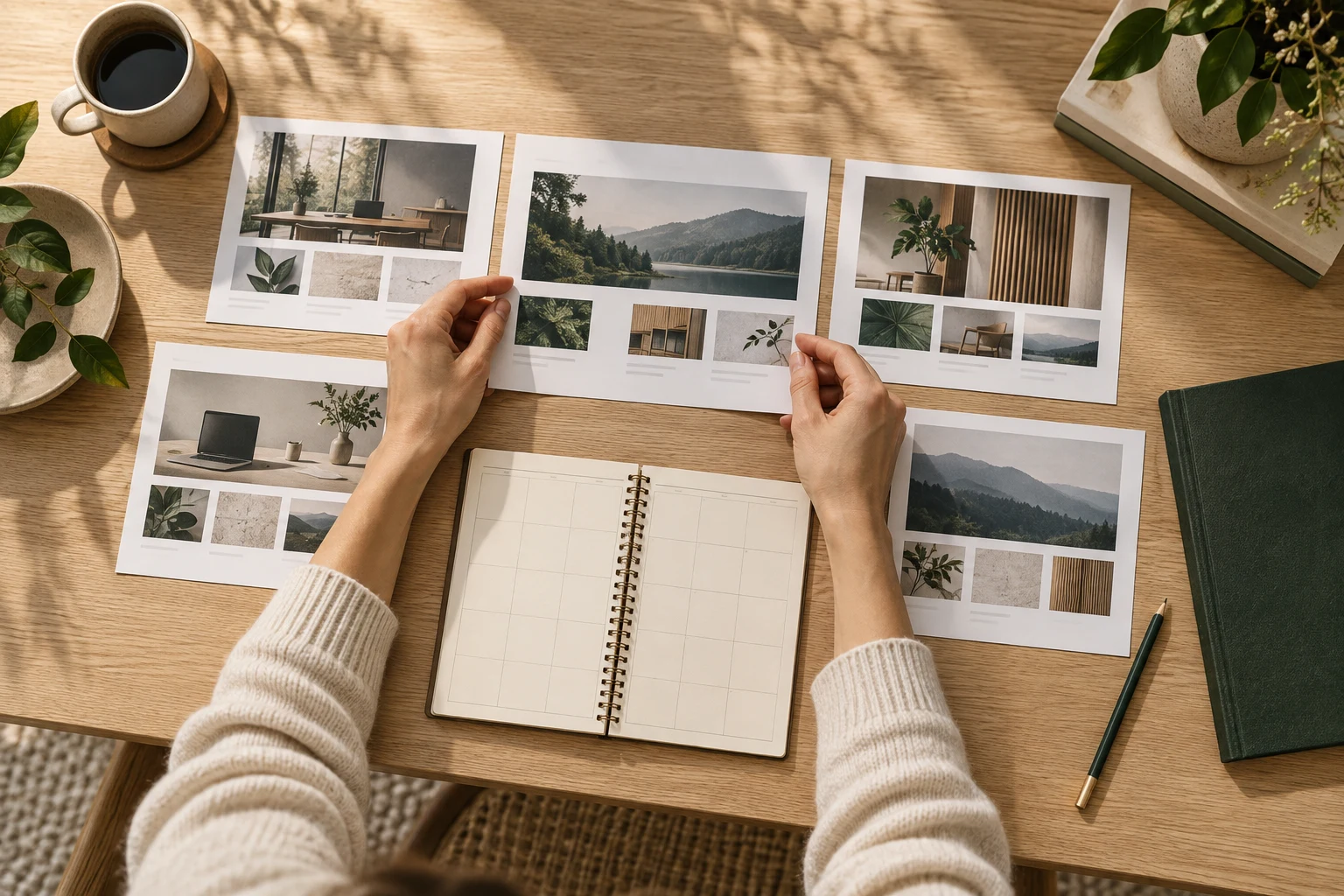
Collect a few images of logos or visual styles you like, and explain the specific reasons, such as "I like the clean lines" or "I like the feeling of this color scheme." Also mention directions you don't want, such as avoiding certain animals or a too-cartoonish feel. Reference images are meant to narrow down communication, not to ask the designer to copy them.
Nice to Have: Materials That Reduce Back-and-Forth Revisions
Brand-Related Text and Slogans
If your company already has a slogan, brand story, or fixed promotional phrase, provide them as well. Logos sometimes need to be combined with these texts, so knowing the content in advance helps the designer consider combination methods and layout space.
Existing Visual Assets
If your company has already established brand colors, font guidelines, or previous materials like business cards or packaging, provide these files to the designer to help maintain visual consistency. If not, you can still indicate your preferred color direction.
Trademark and Copyright Information
If your company name or graphic has already been submitted for trademark application, inform the designer so they can avoid obvious conflicts during the design phase. It's important to note that logo design delivery does not equal trademark registration. Whether a trademark can be registered requires separate search and judgment; these two matters should not be confused.
Budget Range and Timeline
The budget range helps the designer determine the number of concepts and revision rounds. The timeline includes when you expect to see initial drafts and when you need final files. If there are fixed dates like an opening or exhibition, mention them in advance.
Things Worth Confirming When Communicating with Designers
What the Quote Includes
Logo design quotes vary due to several variables: number of concepts, revision rounds, whether brand guidelines are included, whether application materials like business cards are included, and the types and quantities of delivered files. When asking for a quote, directly ask: How many initial concepts does this price include? How many revision rounds? What formats are delivered? Different designers and teams have different pricing structures, so clarifying inclusions is more meaningful than simply comparing total prices.
Source Files and Licensing Scope
Delivered files can be understood in layers: finished files (e.g., JPG, PNG) for daily viewing and use; editable vector source files (e.g., AI, EPS, SVG) for future scaling, color changes, and adjustments; and fonts and image assets that involve licensing. Before commissioning, confirm: Will vector source files be provided? Are the fonts in the source files commercially usable? How are the copyright and usage scope of the logo defined? It's advisable to confirm these in writing before cooperation.
Printing and Production
If the logo will be used for printed materials, specific color modes, bleed, and process requirements should be confirmed with the printer before finalizing. Design files meeting printing requirements does not guarantee that the printed result will match the screen; paper, ink, and processes all affect the final appearance. It's best to align with the printer before production.
Priority Order for Preparing Materials
If time is tight, prepare in this order:
- Exact text format of the company name
- Business description and target audience
- Main usage scenarios of the logo
- Style preferences and directions to avoid
- Budget range and timeline
- Existing visual assets and trademark information
The first four directly determine the design direction, while the last two affect the collaboration pace and delivery scope. The more specific the materials, the lower the upfront communication cost, and the easier it is for the concepts to align with what you truly need.
If you need to commission logo or brand-related graphic design, you can learn about our graphic design services. Start by organizing your materials according to the checklist above, then proceed to specific discussions.