


In the website development process, once the design mockups are completed, the project moves into the page implementation phase. Many business owners assume this step is simply about converting images into web pages. In reality, transforming a design into a functional page involves handling layout, interactions, responsive design, backend integration, and more. Without clear agreements upfront, issues such as misaligned pages, repeated revisions, and post-launch problems can arise. This article walks through three phases—preparation, execution, and review—to explain how to accurately translate design mockups into actual pages.
Preparation Phase: Confirm Completeness and Key Details of the Design
Before turning the design into pages, ensure the design is complete and both parties share a consistent understanding of the details. Typically, the following points need to be confirmed:
- Page Scope: Does the design cover all necessary pages, such as the homepage, listing pages, detail pages, about us, contact page, etc.? If some pages are missing, they should be added in advance to avoid discovering gaps mid-development.
- Interaction Specifications: Designs are static, but page elements like buttons, links, dropdown menus, and pop-ups require clear interaction definitions. For example, should the navigation dropdown expand on hover or click? Which page should the form redirect to after submission? These details should be documented in notes or specification documents.
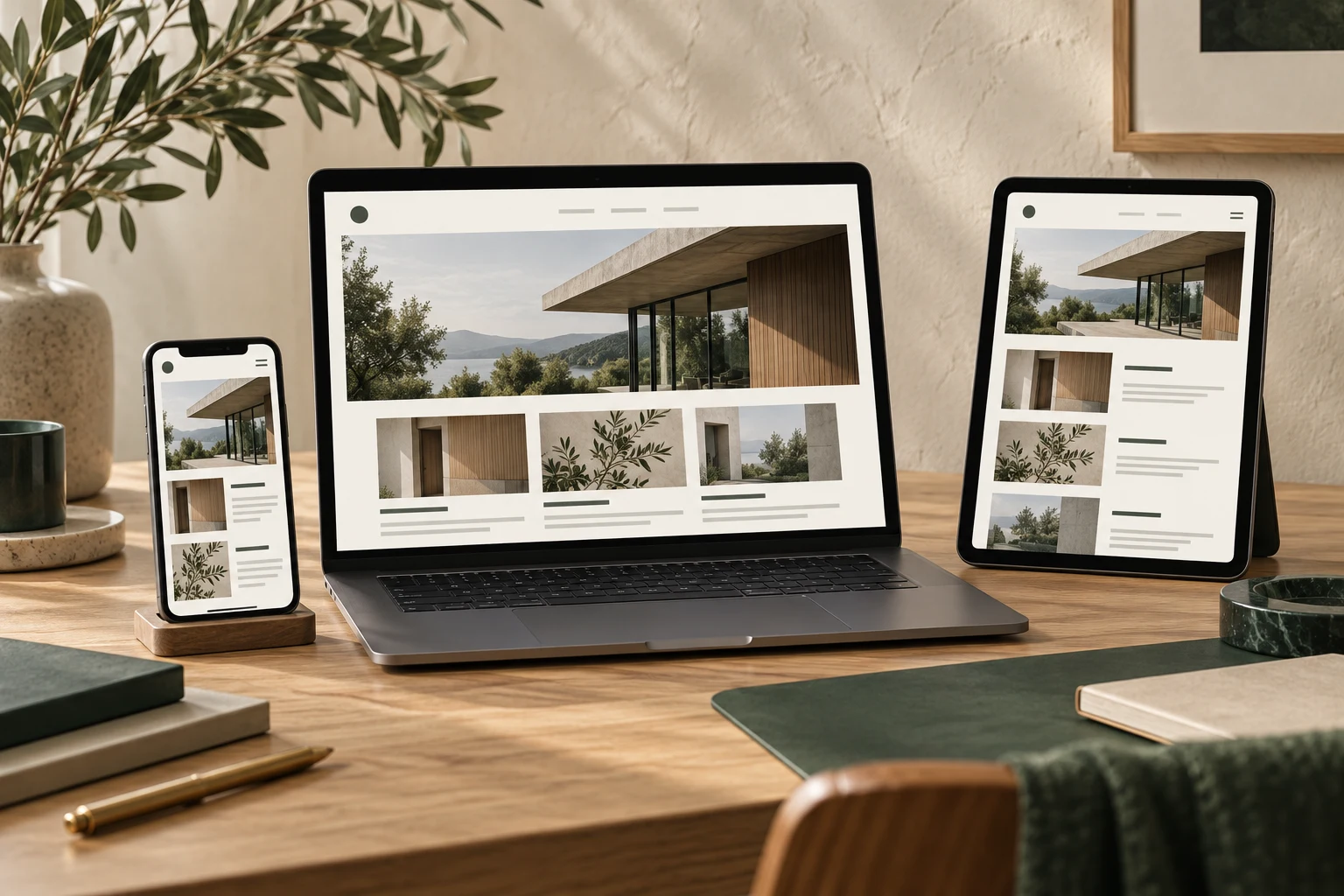
- Responsive Requirements: Websites need to adapt to different devices. Does the design include mobile and tablet layouts? If not, responsive rules must be defined, such as which modules hide or rearrange on mobile. If only desktop designs exist, developers will have to make assumptions, leading to potential discrepancies.
- Backend Integration Notes: If page content is managed from a backend (e.g., news lists, product displays), data fields and calling methods should be planned in advance. For instance, which fields appear on listing pages, and how do titles, body text, and images map on detail pages? This information can be annotated on the design or documented separately.
During this phase, it is recommended that the business owner organizes a brief meeting with design, frontend, and backend (or the website builder) to review the design and confirm all details. This reduces rework caused by misunderstandings later.

Execution Phase: Slicing, Layout, and Style Implementation
After the design is confirmed, the actual production begins. The core of this phase is slicing standards and frontend implementation.
Slicing Standards
Slicing involves exporting necessary image assets from the design, such as logos, icons, background images, and product photos. Key considerations include:
- File Naming: Image file names should be easy for the team to identify, such as header-logo.png, banner-bg.jpg, product-list-thumb.jpg. Avoid generic names like “Untitled-1.png,” which make maintenance difficult.
- Format Selection: Choose formats based on image type. Photos typically use JPG, icons or graphics with transparency use PNG, and simple graphics can use SVG (vector format), but browser compatibility must be verified. Avoid using PNG for all images, as it increases file size and slows loading.
- Dimension Annotations: Dimensions, spacing, font sizes, and color values from the design should be compiled into an annotation document for precise frontend reproduction. Some design tools can export annotations directly; otherwise, manually annotate in a separate document.
Frontend Implementation
Frontend developers build the page structure and styles based on the design and annotations. Several common issues should be agreed upon in advance:
- Fonts and Spacing: Font sizes, line heights, letter spacing, and paragraph spacing should be reproduced as closely as possible, but actual display effects must be considered. For example, fonts used in the design may not exist on users' computers, so system fonts or web fonts must be chosen, which can affect the final appearance.
- Images and Backgrounds: How background images tile or stretch, and whether images need compression to optimize loading speed, should be adjusted based on actual conditions. For instance, a large design image might exceed 1MB; without compression, the page loads slowly, so a balance between clarity and performance is necessary.
- Responsive Adaptation: If the design includes styles for multiple screen sizes, frontend developers need to set media queries at breakpoints (e.g., 768px, 1024px) to ensure proper layout across devices. If no designs exist, adjustments should be made based on content priority, but it's best to clarify this during the design phase.

During development, it's advisable to periodically compare actual page screenshots with the design to identify issues early. Some differences may stem from design flaws, such as text overflowing with real content, which requires communication with the designer to adjust rather than rigidly reproducing.
Review Phase: Detailed Checks and Testing
After the page is built, it should not go live immediately; thorough inspection and testing are necessary. Here are some essential checks:
- Visual Fidelity: Compare the actual page with the design one by one, checking colors, fonts, spacing, and image positions. Screenshots can be compared using image comparison tools, but final confirmation should be manual.
- Functionality Testing: Click all buttons and links to ensure correct redirects; fill out forms to confirm successful submission and expected redirection; test interactions like dropdown menus and carousels.
- Responsive Testing: Use browser developer tools to simulate different phone models or open the site on real devices to check for layout issues, text overlap, and button usability.
- Backend Integration Testing: If content comes from the backend, enter test data to confirm listing pages display correctly, detail pages open corresponding content, and images load properly.
- Performance Check: Open the page and observe loading speed. If images are too large or code is redundant, optimize. Use the network panel in browser developer tools to review resource sizes and load times.
It's best to have different people conduct the review—designers check visuals, operations staff check content, and technical staff check functionality—to catch oversights more effectively.

Common Issues and Solutions
In practice, converting designs to pages often encounters issues; understanding them in advance helps avoid pitfalls.
- Design vs. Real Content Mismatch: Design mockups may use placeholder text, but real content might be longer or shorter, causing layout deformation. The solution is to collect real content early or design with flexible spacing.
- Browser Compatibility Differences: Different browsers (e.g., Chrome, Firefox, Safari) may parse CSS styles slightly differently, leading to inconsistent displays. Test on major browsers and add compatibility prefixes if necessary.
- Backend Data Format Mismatch: Fields shown in the design may not be directly available from the backend, requiring adjustments to backend data structures or frontend display logic. This necessitates close communication between frontend and backend teams.
Conclusion
Turning design mockups into actual pages is a collaborative process involving design, frontend, backend, and operations. Thorough communication during preparation, standardized slicing and implementation during execution, and meticulous testing during review can effectively reduce rework and improve design fidelity. For business owners, understanding these steps helps in better managing project progress and quality.